HomeWhat it is
What is Tongkat Ali?
The root of a slender rainforest tree, used for generations as a traditional tonic and now studied in human trials for energy, testosterone, stress, menopause and healthy aging.
A rainforest tree
valued for its root
Tongkat Ali is Eurycoma longifolia, a tree native to the rainforests of Malaysia, Indonesia and Vietnam, with smaller populations in Thailand, Laos, Cambodia and Myanmar. The root is the part used. In Malay, the name means “Ali’s walking stick”, after the long, twisted root. Rehman et al. 2016, Molecules
- Botanical name
- Eurycoma longifolia
- Family
- Simaroubaceae
- Other names
- Tongkat Ali, Long Jack, Pasak Bumi
- Part used
- Root
- Harvested
- From trees at least 4 years old
Generations of use as a tonic
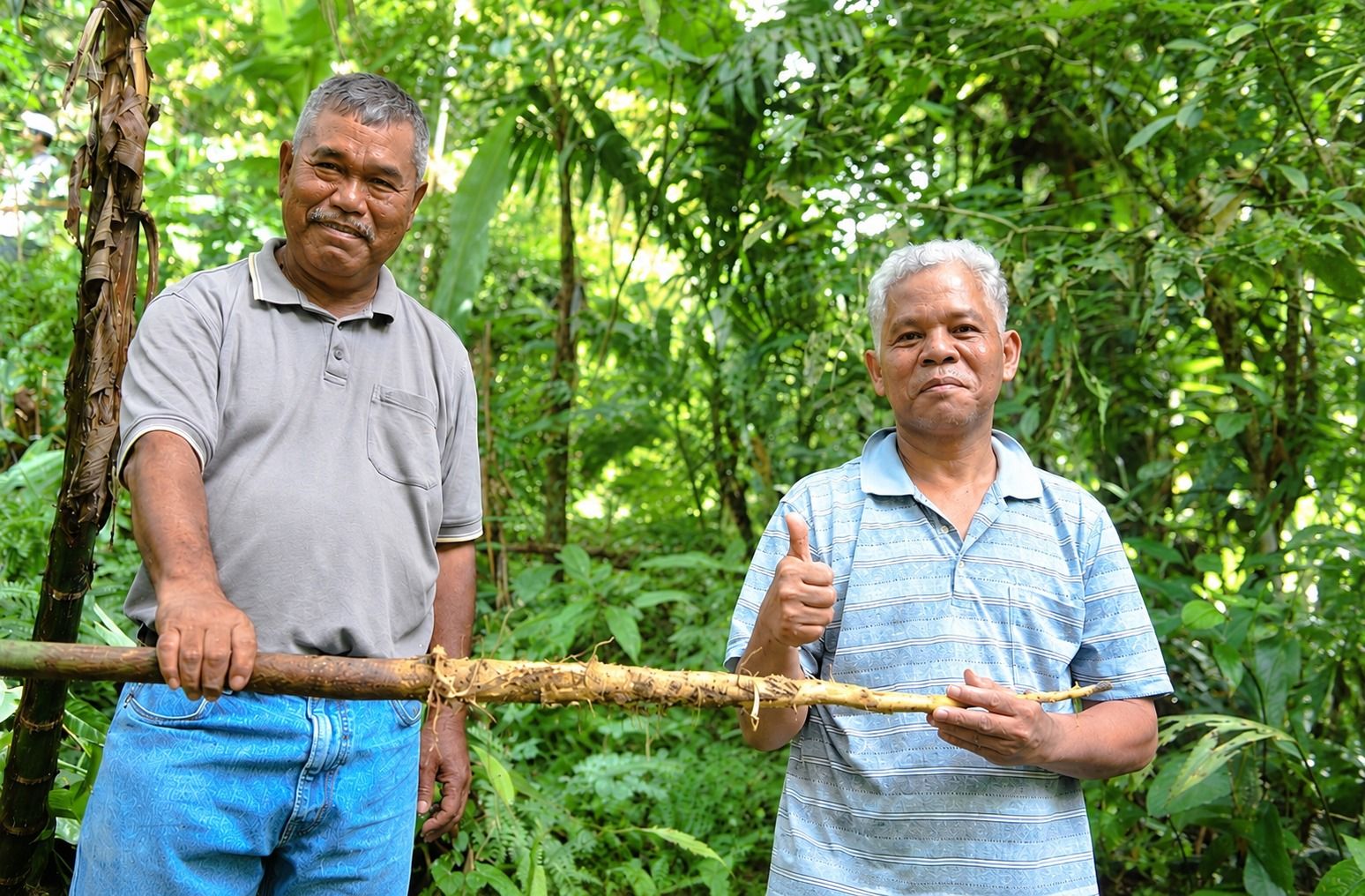
For generations the root was boiled into a bitter tonic. Traditional uses include energy and vitality, male sexual health, recovery after illness, fever and stress. Rehman et al. 2016, Molecules
Because the whole root is harvested, the tree does not regrow. Malaysia now cultivates Tongkat Ali to ease pressure on wild trees, and responsible suppliers replant and trace each batch of root back to where it was collected.
Seven areas of human research
From root to supplements,
coffee and drinks
Today the root is dried and extracted, usually with water, and the extract is used in supplements and everyday products.
- Capsules and tablets
- Effervescent tablets
- Powders and sachets
- Coffee
- Ready-to-drink
- Gummies
The human studies used a standardized water extract. Products made another way may not match those results.
- Standardized water extractMade to a set strength, batch after batch. The form used in most human studies.
- Ratio extractLabeled 50:1, 100:1 or 200:1. The ratio says how much root went in, not the strength.
- Root powderDried, ground root. Far less concentrated than an extract.