HomeFor formulators
How to choose a Tongkat Ali extract
What to ask a supplier, how standardization works and which documents to request before you put Tongkat Ali on a label.
Six questions for any supplier
| Ask | Why it matters | A good answer |
|---|---|---|
| What is the eurycomanone content? | Sets the dose your label delivers. | .8 to 1.5%, by HPLC, every batch |
| Which other markers are controlled? | Eurycomanone alone can be concentrated while the rest is lost. | Total protein, polysaccharides and glycosaponins |
| Has this extract been studied in people? | Research on the plant does not transfer to every extract. | Published human studies on the same extract |
| How is root identity confirmed? | Misidentified and adulterated root is a known risk. | HPTLC on every incoming batch of root |
| Is the root traceable? | Retailers and regulators ask about origin and sustainability. | Traced from collection to batch |
| How is it extracted? | Water and solvent extracts hold different compounds. | Water, matching the human research |
Standardization
The four-marker standard
| Marker | MS 2409:2011 | Test method |
|---|---|---|
| Eurycomanone | .8 to 1.5% | HPLC |
| Total protein | 22% or more | Lowry |
| Polysaccharides | 30% or more | Anthrone |
| Glycosaponins | 40% or more | Gravimetric |
The Malaysian Standard for Tongkat Ali extract sets four markers. In tests of 22 extracts sold as Tongkat Ali, two met all four.
Documents
What to request before you formulate
- Certificate of analysisEurycomanone by HPLC and the other three markers, for the batch you receive.
- IdentityHPTLC results confirming species and plant part.
- ContaminantsHeavy metals, microbes and pesticide residues against stated limits.
- RegulatoryStatus in your market, such as GRAS in the US, and certifications such as Halal, Kosher or GMP.
- ResearchThe published human studies on that exact extract, with dose and population.
From the publisher of this guidePhysta®, the extract
Physta®, the extract
in most of the studies
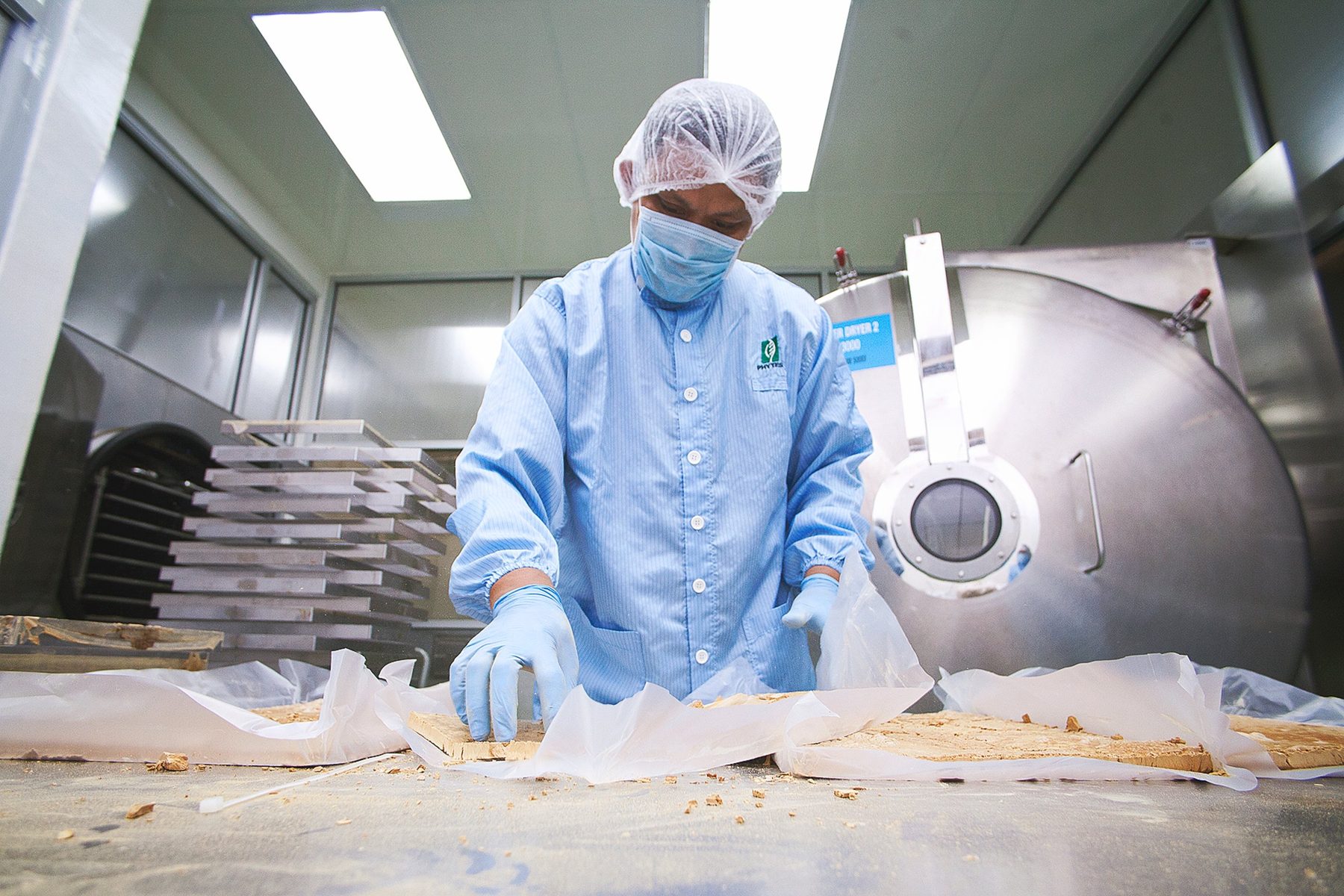
Biotropics makes Physta® in Malaysia, from root collection to released batch. It is used in more than 400 products in 36 countries, and sold in North America as LJ100®.